Culturally Responsive Math Instruction for All Students: The Fishtank Approach
OVERVIEW
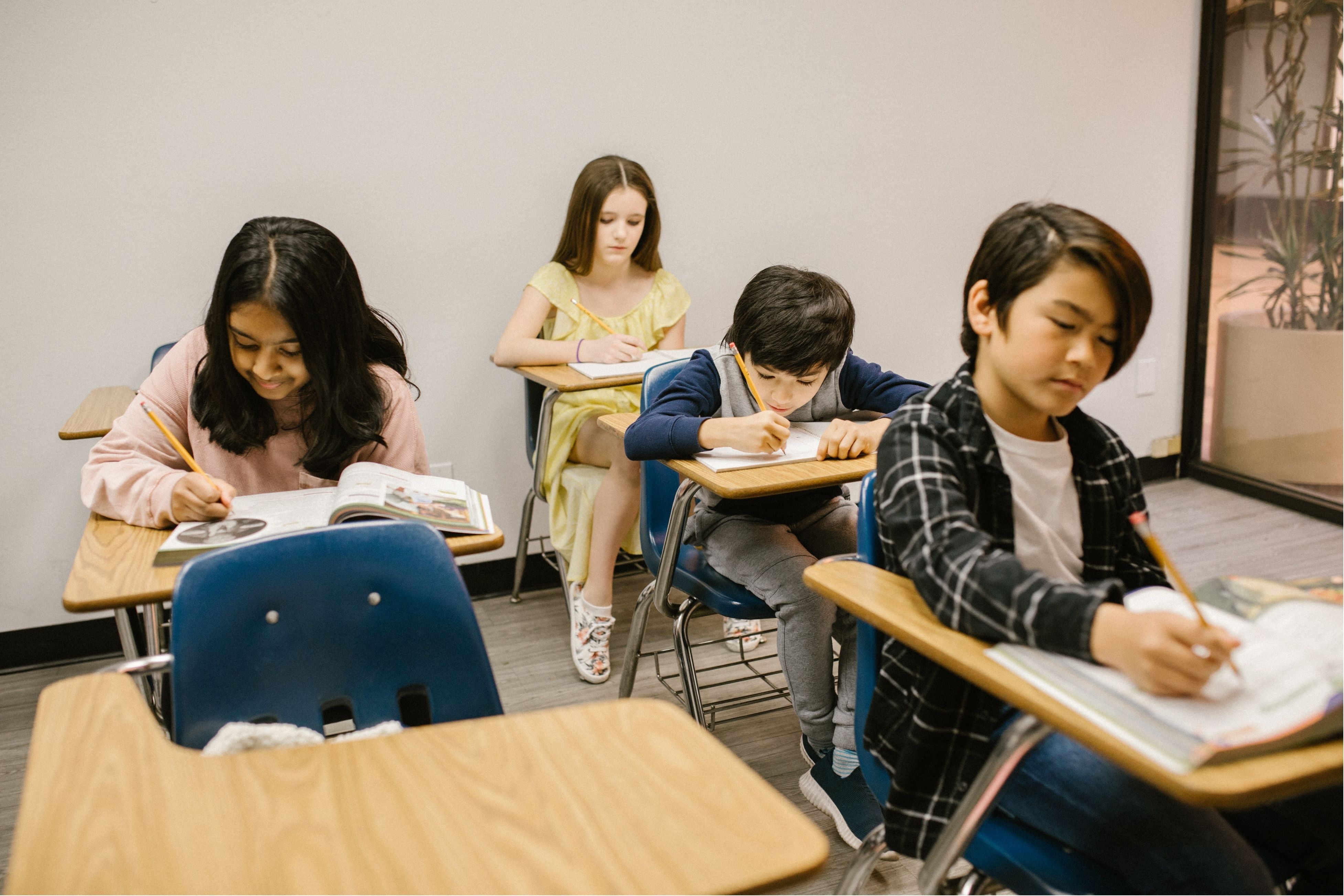
At Fishtank Learning, we believe that math education should spark joy, develop criticality, and affirm the full humanity of every student. Our work is guided by the conviction that mathematics is not just a set of skills but a powerful tool for making sense of the world, building community, and imagining more just futures.
We are expanding on our strong foundation of rich, standards-aligned tasks, to weave in principles of Culturally Responsive Math Teaching (CRMT). CRMT is a holistic approach to math teaching and learning where students’ experiences and diverse ways of thinking are valued and affirmed, and where students are positioned not just as doers of math, but as thinkers, creators, and changemakers. Culturally Responsive Math Teaching is more than surface-level changes to curriculum. It’s about shifting classroom dynamics and power: creating spaces where students’ voices, experiences, and ways of thinking are central to the math classroom.
A curriculum grounded in CRMT reflects students’ identities and communities, creates opportunities for joy and criticality to live side by side, and equips teachers with the information and tools they need to make math a practice of empowerment.
We are proud to be among the first curriculum teams centering CRMT at this level, setting a new standard for what math curriculum can and should be: rigorous and joyful, culturally grounded and intellectually expansive, a resource that grows alongside the students and teachers who bring it to life. We are committed to a practice of continual learning and reflection, which allows us to iterate and evolve our resources to better serve the classrooms where they live. We invite you to join us in this journey of making math education a practice of liberation—a powerful force for belonging, possibility, and justice.
Read more about what defines CRMT in our FAQ below, and see examples of what it looks like in our 7th and 8th-grade curriculum.
How We at Fishtank Think About CRMT
We approach CRMT as a way to design math learning that honors and connects students’ identities and ways of thinking. Students’ voices are heard and their cultural knowledge is valued and shared. Students learn from their collective problem-solving approaches and expertise. This lens guides the design of tasks and facilitation moves that support equity, engagement, and rigorous mathematical reasoning.
CRMT is an evolving practice, and we bring a learning orientation. We continually learn, reflect, and refine our curriculum based on feedback, collaboration, and research. CRMT is not a fixed set of lessons; it is a framework for thinking, planning, and engaging in mathematics instruction in a way that honors all students.

CRMT and other instructional practices don’t compete with each other, they amplify each other.
We view CRMT as a lens that deepens and enhances other research-backed math practices including the Standards for Mathematical Practice and Math Language and Instructional Routines. By integrating CRMT with other practices, our curriculum provides opportunities for students to engage in rigorous learning while supporting teachers in fostering agency and meaningful mathematical reasoning.

The Value of CRMT
CRMT strengthens both equity and rigor. By opening multiple pathways into complex problems and fostering meaningful discussion, culturally responsive approaches develop reasoning, creativity, and conceptual understanding—all linked to long-term mathematical success. At its core, CRMT is about more than access to content; it cultivates joy, belonging, and confidence alongside problem-solving power.
Students succeed when their identities are affirmed and reflected in their learning. Research shows that culturally responsive approaches increase engagement, understanding, and achievement. In math, these approaches disrupt the “gatekeeper” role the subject has too often played, turning it instead into a road toward opportunity and agency. When students’ ways of thinking are validated, it leads to increased persistence, risk-taking, and confidence in mathematics.
Our Ongoing Process
Embedding Culturally Responsive Math Teaching into our curriculum began as a goal: to create units and lessons that connect deeply to students’ lives, identities, and communities. We started by exploring research and reviewing frameworks for equitable mathematics instruction, including lesson analysis rubrics and Culturally Responsive STEAM curriculum scorecards. We drew on the scholarship of Gholdy Muhammad, Gloria Ladson-Billings, Geneva Gay, Julia Aguirre, and Rochelle Gutiérrez, all of whose work shaped how we thought of the brilliance and identities of the students for whom we were writing curriculum. These resources helped inform a tool for evaluating and improving our lessons, ensuring that they center students’ identities, foster multiple ways of expressing mathematical thinking, and support rigorous content while offering thoughtful scaffolds.
With this foundation, we began making concrete changes starting with 7th and 8th grades. Anchor Problems were redesigned to be more relevant, real-world, and meaningful. Warm Ups were added to connect learning to prior knowledge, students’ lived experiences, and broader societal issues. Facilitation Guidance now includes launches that prompt explicit connections, debriefs that extend thinking to real-world contexts, and strategies that help teachers create inclusive, empowering discussions. These adjustments aim to show how mathematics can bring joy, illuminate inequities, and inspire students to take action.
Looking ahead, we are excited to keep expanding this work so that it reaches students across all grade levels of our curriculum. Once we wrap up our work in middle school, finishing 7th and 8th Grade and then moving on to 6th, we will then shift our focus to K-5, starting with envisioning what this work looks like in these elementary grades.
Along the way, we will continue learning from one another and from experts in the field, considering both the scholarship around CRMT and math pedagogy, while staying reflective about our progress and challenges. Our small but diverse team brings a range of racial, LGBTQ+, and cultural perspectives to this work, yet we also acknowledge the limits of our representation and the need to engage with voices and experiences beyond our own. Over time, we hope to partner directly with schools and educators to gather feedback and continue refining the curriculum so that it increasingly reflects the brilliance of all students and communities it is meant to serve.
Frequently Asked Questions about Culturally Responsive Math Teaching
Is CRMT just about adding “diverse” names or pictures to math problems?
Not at all. Representation matters, but CRMT is much more than surface-level changes to curriculum. It’s about shifting classroom dynamics and power: creating spaces where students’ voices, experiences, and ways of thinking are central to the math classroom. Representation is a doorway, but the heart of CRMT is in the relationships, the high expectations, the intentional facilitation, and the opportunities for students to shape and lead their own learning.
Does CRMT lower rigor?
No—CRMT actually raises the bar. The math itself stays rigorous, and students gain more ways to access it. By connecting math to real contexts, by validating students’ ideas and strategies, and by positioning them as mathematical thinkers, CRMT makes rigorous learning feel relevant and achievable. It’s not about making math easier—it’s about making it matter.
Is CRMT only for students of color?
No. CRMT benefits all students. CRMT affirms identity, particularly for students of color, while also expanding every student’s understanding of mathematics as a human endeavor across cultures. It builds empathy, critical thinking, and a sense of belonging—shared goals that strengthen math classrooms for everyone. All students are doers of mathematics and deserve learning that is rigorous, relevant, and responsive.
What does CRMT look like in practice?
It can look like a teacher drawing on students’ funds of knowledge to adapt a problem. It can look like students debating strategies, validating multiple pathways, and reflecting on whose voices are heard in math. It can look like investigating real-life data that connects to community issues, or ensuring students see themselves as capable mathematicians. CRMT is not a single strategy or lesson. It’s a stance that shows up in planning, questioning, facilitation, and reflection.
What if I don’t share the same background as my students?
That’s okay—and it’s impossible to share every identity with every student in your classroom. CRMT doesn’t require teachers to have the same backgrounds, cultures, or experiences as their students, but it does ask teachers to be learners: to approach students and communities with curiosity, humility, and respect. Part of CRMT is reflecting on one’s own identity, biases, and power in the classroom—and being willing to grow alongside students.
Is CRMT a quick fix or a checklist?
No. CRMT is ongoing work. It’s not a program you can complete or a list of boxes to check. It’s a continual process of reflection, learning, and shifting practice. Even small moves—like rethinking how you position a student’s contribution, or how you frame a word problem—can make a big impact. Over time, those moves add up to a classroom where students feel seen, challenged, and empowered.
Why does CRMT matter?
Because math is not neutral—it has always been tied to power, access, and opportunity. Too often, certain students have been told (explicitly or implicitly) that math isn’t for them. CRMT interrupts that narrative. It gives every student a chance to see themselves as capable mathematicians, to understand the world through math, and to use math as a tool for imagining and creating real change.
Further Reading & Resources
Culturally responsive math teaching is living work, built on the ideas and commitments of many scholars, educators, and communities. Below are some of the thinkers, frameworks, and tools that have shaped our approach. We invite you to explore these resources, share them with colleagues, and continue building collective knowledge. If there are other resources you’ve found powerful, we’d love to learn from you as well.
Frameworks for Culturally Responsive and Liberatory Teaching
- Gholdy Muhammad (2023). Unearthing Joy: A Guide to Culturally and Historically Responsive Curriculum and Instruction. Scholastic.
- Gholdy Muhammad (2020). Cultivating Genius: An Equity Framework for Culturally and Historically Responsive Literacy. Scholastic.
- Zaretta Hammond (2015). Culturally Responsive Teaching and the Brain. Corwin.
- Gloria Ladson-Billings (1995). “Toward a Theory of Culturally Relevant Pedagogy.” American Educational Research Journal, 32(3), 465–491.
Mathematics Education and Identity
- Aguirre, J. M., Mayfield-Ingram, K., & Martin, D. B. (2013). The Impact of Identity in K–8 Mathematics: Rethinking Equity-Based Practices. NCTM.
- Aguirre, J. M., & Zaval, M. R. (2013). “Analyzing Middle School Mathematics Curricula: A Comparative Study Using Three Measurement Tools.” Pedagogies: An International Journal, 8(2), 163–190. (View)
- NCSM & TODOS: Mathematics for All (2016). Mathematics Education Through the Lens of Social Justice: Acknowledgment, Actions, and Accountability. (View)
Justice-Oriented Tools and Rubrics
- Learning for Justice. Social Justice Standards: The Teaching Tolerance Anti-bias Framework. (View)
- Pathway to Equitable Math Instruction (2021). Dismantling Racism in Mathematics Instruction. (View)
- BranchED. Equity Rubric for OER Evaluation. (View)
- WestEd (2024). Essential Characteristics of Culturally Responsive Systems in Mathematics Curriculum Materials. (View)
- Culturally Responsive-Sustaining STEAM Curriculum Scorecard. (View)
Podcasts, Videos, and Online Learning
- Rounding Up: The Math Education Podcast - Conversations with educators and researchers about culturally responsive and justice-oriented mathematics instruction. (View)
- Todos: Mathematics for All Podcast - Practical strategies and stories for centering equity in math classrooms. (View)
- National Council of Teachers of Mathematics (NCTM) Free Webinars - Topics include CRMT, problem-solving, discourse, and formative assessment. (View)
- Learning for Justice Webinars and Resources - Free professional learning and tools to integrate anti-bias and social justice practices in schools. Click here for Webinars and here for Professional Learning around the Anti-Bias Framework.
Weaving in CRMT in 7th and 8th Grade
In our 7th and 8th grade curriculum, lessons and Anchor Problems have been enhanced to intentionally support students’ identities, foster rigorous mathematical thinking, and create opportunities for student ownership. Across the curriculum, students are invited to draw from their own experiences, communities, and cultural knowledge, explore multiple ways of approaching problems, and engage with mathematics as a tool to understand and act on real-world issues. Examples of what this looks like in our curriculum include:
-
Using scientific notation to analyze password strength, connecting the math to students’ digital lives.
-
Exploring proportional reasoning through Lakota bead patterns, offering windows and mirrors into Indigenous traditions.
-
Using inclusive language and multiple approaches to value different perspectives and build shared understanding.
-
Drawing on home language and linguistic resources to reason through mathematics and communicate thinking.
-
Modeling minimum wage and pay structures with equations to critique economic realities.
-
Analyzing representation in children’s books using real data, connecting math to issues of racial equity.
CRMT Inline Tags in the Curriculum
You’ll also notice CRMT tags embedded directly into lessons. These tags signal an intentionally designed element—a facilitation move, context, prompt, or question crafted to support culturally responsive math teaching. The tag is not intended to force a particular script; rather, it’s an insight into our design choices. Teachers bring professional judgment and deep knowledge of their students. The tag simply lifts up one purposeful opportunity. You may choose to:
-
use it exactly as written,
-
adapt it to fit your students’ interests and needs, or
-
extend it further to deepen conversation, joy, or empowerment.
In this way, the tag functions less like a directive and more like an invitation—a window into how CRMT is woven into the fabric of the lesson, and a reminder that you have agency in how to make it meaningful for your students.
A hurricane left a community without running water for 4 days because of pollution due to flooding. The following data on household water use was collected during the 4-day period:
- A household with 1 adult used 26 gallons of water.
- A household with 2 family members used 32 gallons of water.
How much water should a household of 5 people keep on hand for an emergency? Explain your reasoning for your recommendation.
This new Anchor Problem in Lesson 7 of Unit 4 in 7th grade situates proportional reasoning in the real-world context of water supplies during an emergency, which helps students see the power of math for making sense of urgent personal and community needs. The design supports culturally responsive math teaching by:
-
Inviting personal reflection: Students can connect to lived or nearby experiences with storms, displacement, or community preparation, making the math more meaningful.
-
Encouraging student ownership: Students build shared understanding by questioning one another, discussing strategies, and testing different proportional approaches.
-
Valuing multiple ways of communicating: Drawings, ratios, tables, or verbal reasoning are all welcomed, affirming that communication in math can take many forms.
-
Connecting to justice: The context opens space to consider which communities are most impacted by natural disasters and how resources are allocated, linking math to real inequities.
-
Highlighting collective problem solving: Students see math as a communal tool for survival and fairness, not just an individual skill.
Akua is excited to launch her own soap making business. One of the main ingredients she needs for her soaps is shea butter. She researches different companies where she can buy shea butter in bulk quantities and narrows her decision down to two options: Baraka Impact and Bulk Apothecary.
Baraka Impact ethically sources its shea butter directly from women in Ghana and contributes part of its profits to support Ghanaian communities. Bulk Apothecary has consistent, positive reviews from its customers and its shea butter is certified organic.
Baraka Impact is currently offering a sale: 50 lbs of shea butter for $300.
The graph below shows purchasing information for Bulk Apothecary.
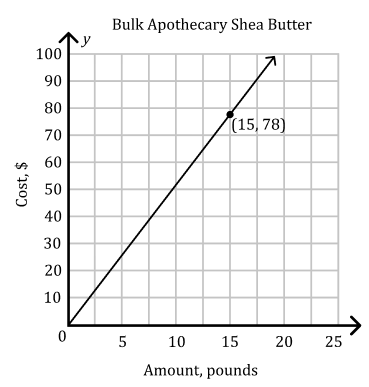
Which company do you think Akua should use to purchase the shea butter she needs for her soaps? Explain your reasoning.
This new Anchor Problem uses soap-making, an everyday and culturally rich practice, to explore linear relationships and proportionality. It draws on students’ funds of knowledge and affirms that math connects to real-life decisions, creativity, and community strengths. The design supports culturally responsive math teaching by:
- Referencing funds of knowledge: Soap-making connects to home practices, family businesses, and cultural traditions, grounding abstract math in lived experiences.
- Lifting up student language: Teachers can record and revoice language that students use (including home languages), positioning them as valid resources for mathematical thinking.
- Affirming positive math identities: Multiple solution paths (tables, equations, graphs) are emphasized, and there isn’t a single “right” way to answer the questions, supporting flexibility in using math to model and reason about the world.
- Inviting analysis of issues students connect to: Students might reflect on costs, sustainability, or small business economics, giving space for authentic critique.
- Showcasing diverse thinking: Sharing and honoring varied approaches highlights the value of collaboration and inclusivity in mathematical problem solving.
Want to learn more about CRMT and how it can work in your school?
- Click here to schedule a demo at your convenience!
- Click here to explore our comprehensive math curriculum.