
New 2026-27 Fishtank ELA Updates: What’s Changing for Writing & Language Instruction?
April 01, 2026

We shared our updates to Fishtank ELA’s Writing and Language curriculum in a recent insider session.
Missed the live event? Watch it here.
Here's a summary of what we showcased:
Intentional Sequence of Writing Tasks
Each unit has at least two multi-day writing projects that engage students in authentic writing tasks in each genre. In middle school, these projects are of different genres, which allows for spiraled practice throughout the year. In High School, these projects are of the same genre, with a mid-unit writing project that scaffolds towards the end-of-unit performance task.
Authentic Writing Tasks
We've prioritized authentic tasks because students are more invested and motivated when they can apply their writing skills to real-world problems of practice. Here are some of the authentic tasks students will experience:
-
7th Grade Unit 2: It is April 15, 1911. You are a journalist writing about the Triangle Shirtwaist Factory Fire. Write an op-ed for the New York Times about labor laws in the US in response to the fire.
-
9th Grade Unit 2: Imagine that you are a curator for the Iziko Museums of South Africa. In groups, you will create a digital exhibit that celebrates an aspect of South Africa's vibrant culture. Individually, you will conduct research to curate 2–3 unique artifacts, along with a label for each. With your group members, you will combine all the artifacts to create an educational, digital exhibit for your classmates to explore.
Teaching the Writing Process
We teach the writing process. Fishtank's multi-day writing projects are organized to include instruction and practice of these phases: planning, drafting, editing, and revising. For example, in 6th Grade Unit 1 Lesson 20, students write personal narratives over the course of 5 days, each day with a specific objective:
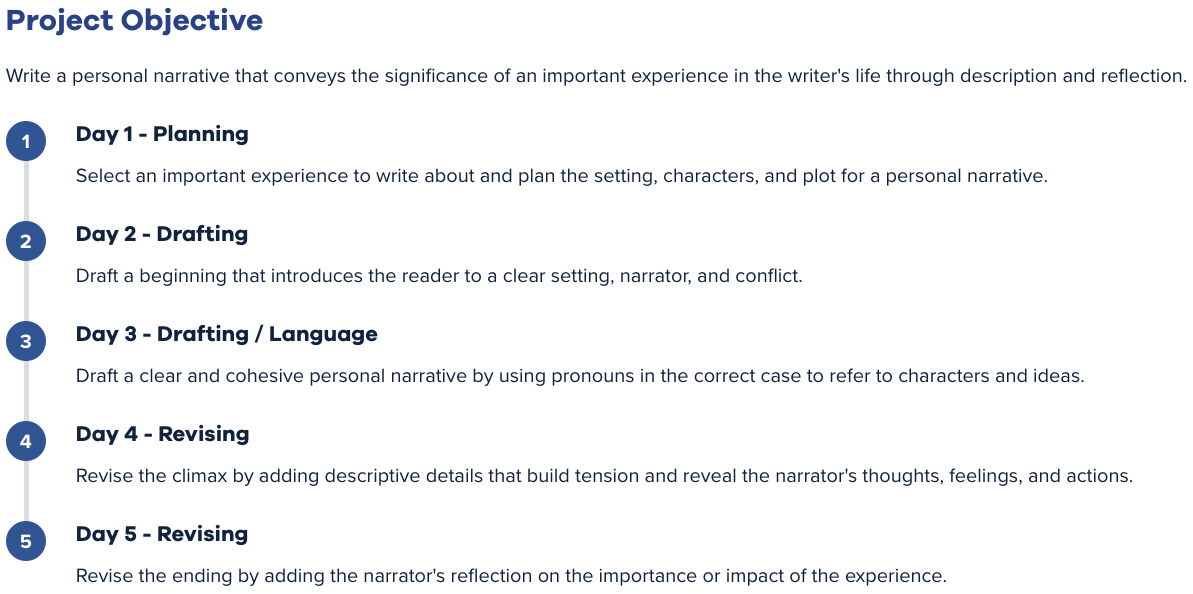
Our lesson map has been designed to clearly showcase how instruction builds from one day to the next to support student learning.
Aligned & Streamlined Rubrics
We've created aligned and streamlined writing rubrics to make it easier for teachers and students to gauge progress within and across genres throughout the year. Each grade has one narrative rubric, one informational rubric, and one argumentative rubric with common categories and clear vertical alignment across grades. Because students can't master all skills at once, we have also included task-specific, single-point rubrics derived from the genre rubrics. Written in student-friendly language, these rubrics narrow the focus for both teachers and students to the actual writing skills taught within particular tasks.
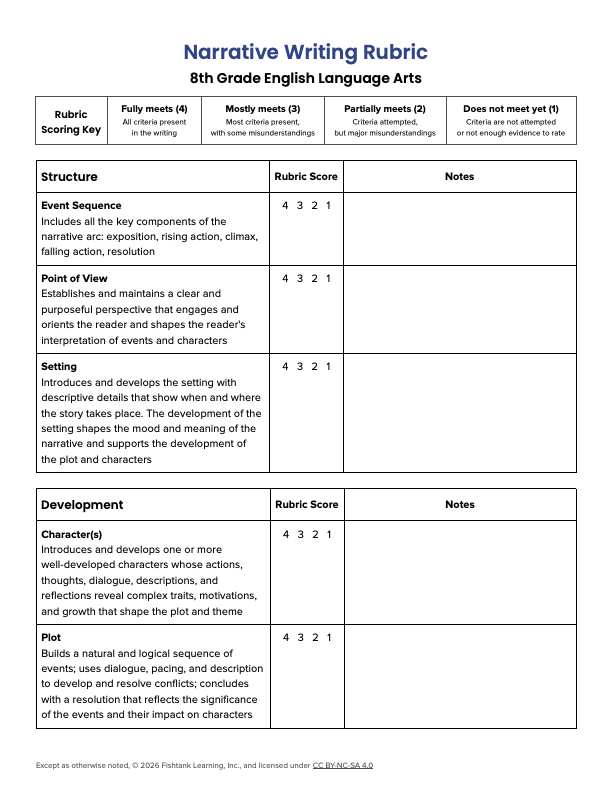
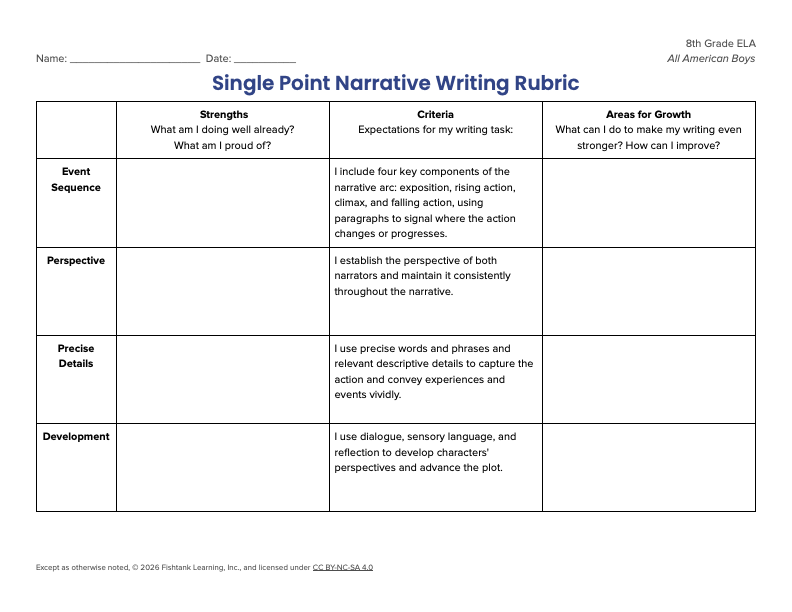
Single Point Paragraph Writing Rubric (G8, U1)
Explicit Writing & Language Instruction
Research suggests that explicit instruction—following an I do, We do, You do model—is an effective practice for teaching writing. This explicit instruction and the gradual release model are built into every Fishtank writing lesson. To support explicit instruction, writing lessons articulate bite-sized, transferable teaching points.
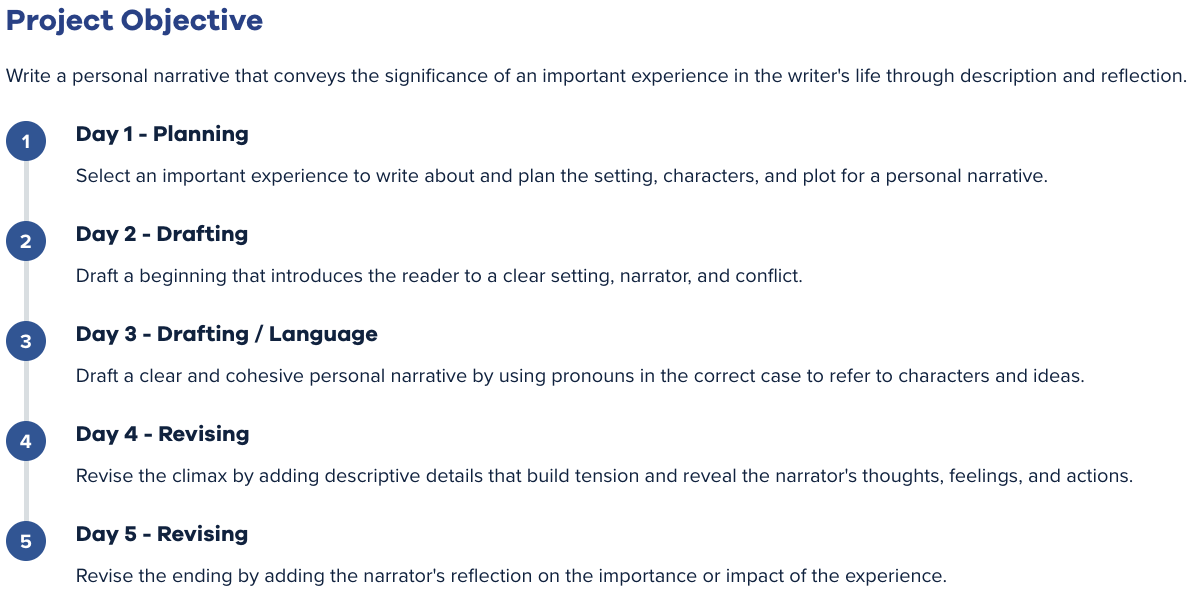
Let's look at the same example from 6th Grade Unit 1 Lesson 20 and the teaching points included along the way:
|
Day 1 |
Writers plan their narratives by selecting a topic and organizing events into a clear sequence. |
|
Day 2 |
Writers draft engaging beginnings by establishing the setting, introducing the narrator, and revealing the conflict. |
|
Day 3 |
Writers improve the clarity and flow of their drafts by using pronouns in the correct case. |
|
Day 4 |
Writers use descriptive details in the climax that build tension and reveal the narrator's thoughts, feelings, and actions. |
|
Day 5 |
Writers end narratives by including the narrator's reflection on the importance or impact of the experience. |
Teacher Feedback Tables
We know conferring with students about their writing and providing feedback is one of the primary drivers of student progress in writing. We also know it can be hard to know what the highest leverage feedback is to give students.
Every lesson now includes a Teacher Feedback & Conferring section, providing specific "Look-Fors" and coaching areas, so you never have to guess what to prioritize during a writing conference.
—
Supportive Resources
We've updated or added several resources to help teachers make the most of all these updates. Explore our updated Teacher Tools focused on planning writing lessons and understanding the genre progressions (Narrative, Informational, Opinion, and Argumentative) across middle and high school courses.
Related Blog Posts

Five Exciting Enhancements for Fishtank Student 2026-27
Missed our live event? See the 5 most important takeaways from our insider session revealing all that’s coming for Fishtank Student, our purpose-built digital platform.

