Why Grade-Level Content is Key to Closing Opportunity Gaps
July 17, 2026
How HQIM Keeps Expectations High for Every Student
If you’ve walked through a school building recently, you’ve felt the sheer volume of effort. Educators are handling an unprecedented range of academic and emotional needs within a single classroom: differentiating, intervening, scaffolding, conferring, and pulling small groups. The commitment is real. The effort is real.
Even with this exhausting work, there is too much disparity in students’ access to challenging and enriching learning experiences. The opportunity gap persists.
The Reality of The Opportunity Myth
Data from The New Teacher Project’s (TNTP) landmark study, The Opportunity Myth (2018), reveals an unsettling reality: while students are successfully doing what is asked of them in school, they spend a staggering 500 hours per school year on assignments that are below grade level. Further, “They met the demands of their assignments 71 percent of the time, and more than half brought home As and Bs. Yet students only demonstrated mastery of grade-level standards on their assignments—a benchmark for being on track for the lives most of them want as adults—17 percent of the time.”
What does TNTP’s study mean in practice? It means that the disconnect isn’t happening on state test days; it’s happening on ordinary Tuesdays in the classroom. Students are earning high marks on the work they are given, but because those daily assignments lack grade-level rigor, doing well on them doesn’t actually translate to actual standards mastery.
For students of color and historically underserved communities, that access is even more restricted.
That said, we can improve outcomes for our students by providing them with access to engaging grade-level content.
– The Opportunity Myth
The data tells a clear story. The gap isn’t a reflection of student capability. When given access to actual grade-level work, these same students succeed.
This raises vital questions for school leaders as we look toward a new school year: What if our well-intentioned instinct to "meet students where they are" has accidentally created an artificial ceiling on their potential? Moving forward, how do we shift our approach to ensure every student consistently receives the grade-level access they deserve?
The Remediation Trap
The pattern is familiar. A student arrives in fifth grade reading two years below grade level. Guided by good intentions, we hand them texts written for third graders. The thinking seems sound: secure the basics, build confidence, and work our way up. But by year-end, the gap hasn't closed. Often, it's widened. This is because true equity isn’t about giving students easier work. It’s about protecting their right to grade-level rigor from day one.
This is about flawed systemic design. In our collective effort to support students, we've inadvertently built a system that asks them to demonstrate mastery of yesterday's content before earning access to today's. We've made grade-level rigor a reward instead of a right.
Harvard's Jal Mehta calls this a pernicious myth: the assumption that students must master "the basics" before they're allowed into deeper learning. His most uncomfortable observation? This myth actively widens the opportunity gap. The data consistently show that students in higher-income demographics are pushed into ‘advanced tracks’ rich in complex, layered learning experiences. At the same time, students in marginalized groups are assigned to systemic remediation models that route them into low-level skill drills. Same district, same standards, different ceilings.
Before investing in high-quality curriculum for all students, Michelle Espino, who leads literacy work in Oakland Unified, would hear it from students coming back from college: "What kids were consistently coming back and saying was, 'I needed more reading support. I needed to be reading higher-level texts because now that I'm in college, I don't understand what's going on, and I don't have the strategies to navigate those things.'"
These students weren't asking for easier assignments. They were asking for harder, more rigorous work, but with help.
Why True Agency Requires Just-in-Time Support
This brings us to a concept that is often overused but critical to define: differentiation.
Differentiation has never meant modifying the content. It's always meant adjusting how we deliver instruction so every student can access the same rigorous learning. Somewhere along the way, "differentiated" became a polite synonym for a "simpler version of the work for some students." That was never the intent, and it's not the path to equity.
At Fishtank, we draw a sharp line between simplifying the content (making it easier) and scaffolding the process (making it accessible). We don't shy away from grade-level content. We scaffold the rigor.
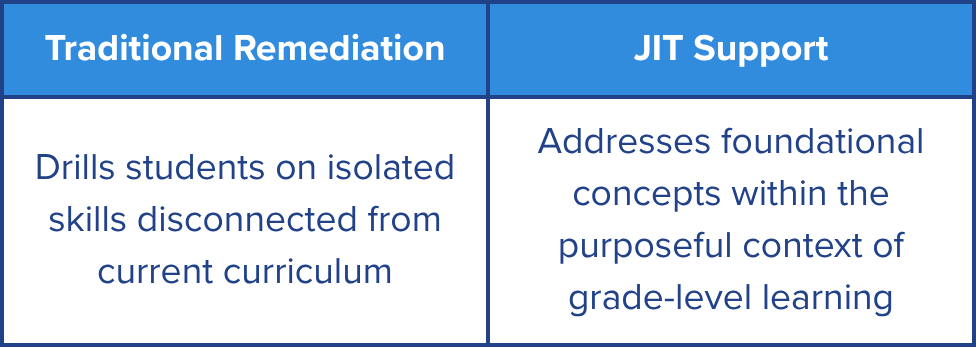
In practice, this means pairing grade-appropriate Anchor Tasks and Guiding Questions with just-in-time (JIT) supports. TNTP’s Accelerate, Don't Remediate framework captures this distinction precisely: traditional remediation spends significant time on below-grade content before students ever face new learning. Acceleration, by contrast, weaves prior-grade concepts directly into the context of grade-level work, introducing them only when they are needed to unlock the next instructional step. As organizations like Let’s Go Learn and Instruction Partners note, JIT support addresses past concepts within the purposeful context of current learning. These prerequisite skills are the "load-bearing walls" of a unit: the essential foundations required to hold up the grade-level work above them.
David and Meredith Liben’s work for Achieve the Core points to this exact balance in literacy instruction. A strong, equitable approach rejects the idea that we must choose between foundational skills and complex text, or between phonics and knowledge-building. It requires both. The bar remains steady while the supports flex.
This balance is the core design principle behind Fishtank’s curriculum. For ELA, our Text Selection Framework and task design ensure that the bar remains high. At the same time, our lesson plans, Teacher Tools, and Supporting All Students Framework provide teachers with the entry points students need.
This philosophy even reshapes our approach to assessment: For example, rather than relying on a massive, deficit-based back-to-school diagnostic, Fishtank Math uses short, unit-by-unit pre-assessments. This allows teachers to identify and target only the foundational standards students actually need for the upcoming work.
Rigor in Practice: Grade 5, Unit 3, Lesson 2, Protecting the Earth
To understand how this looks in the classroom, let’s examine Fishtank’s 5th Grade ELA Unit, “Protecting the Earth.” Throughout the unit, students investigate the global buildup of plastic in the world's oceans and its long-term environmental impact.
The core text for the unit is Trash Vortex by Danielle Smith-Llera. With a Lexile level of 1120L, this text falls at the high end of the fifth-grade complexity band. In a traditional remediation model, a text this advanced might be swapped out for an easier excerpt or a simplified passage under the assumption that it's "too frustrating" for students who are reading behind grade level.
Fishtank takes a different approach. Rather than altering the text to meet students where they are, the unit is systematically structured to build students’ background knowledge before and during their engagement with the book. By intentionally pre-teaching critical vocabulary and anchoring scientific concepts in classroom discussions, the curriculum ensures that text complexity isn’t a barrier to comprehension.
Instead of leaving teachers to guess how to bridge the gap, Fishtank’s materials include built-in, flexible scaffolding strategies that help teachers support students through the most challenging aspects of the text. In this way, Fishtank protects both the integrity of the text and the student’s opportunity for productive struggle.
Unpacking Complexity in the Unit Launch
Before the unit begins, teachers engage with the Unit Launch. This professional preparation tool helps teachers identify exactly what makes a text challenging so they can plan with anticipation rather than remediation. For Trash Vortex, the Unit Launch clarifies that the book’s complexity is driven by high knowledge demands in addition to Lexile level. By mapping these out ahead of time, teachers can get ahead of the questions that hold back understanding.
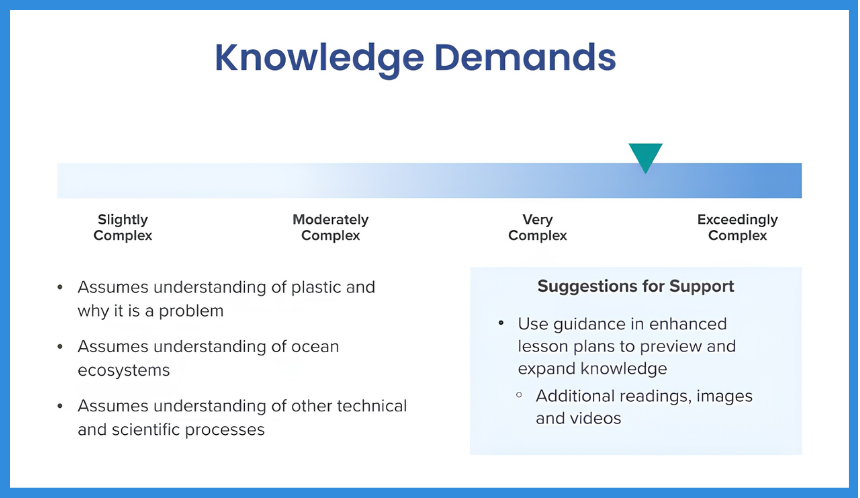
Knowledge Demands is one of four measures of the quantitative and qualitative complexity of the core texts in a unit. Each unit includes a short video explaining complexity to help educators identify ways they can support their students' understanding of the texts throughout the unit.
Defining Success with Target Tasks
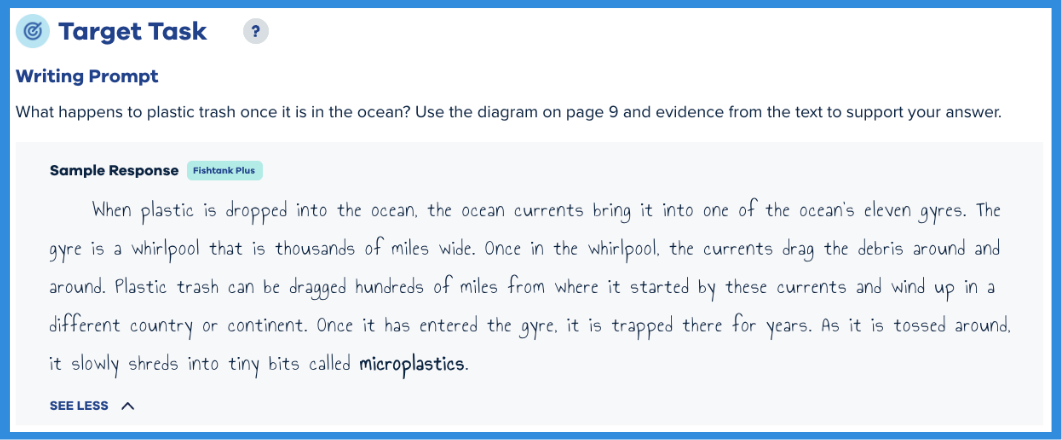
Teachers aren’t left wondering what a high-quality student response should look like. Fishtank Plus provides detailed sample responses for Target Tasks and other key questions students are expected to answer. By offering a clear picture of the deep thinking students are working toward, educators can accurately assess their students’ learning and provide meaningful feedback in real time.
Deploying Just-In-Time Scaffolds While Maintaining the Bar
With the high bar clearly set, the curriculum embeds just-in-time (JIT) supports directly into the lesson to help students understand some of the more complicated concepts in the text without lowering the rigor. For example, in Lesson 5, students will need to describe what happens to plastic trash once it’s in the ocean. Here again is that Target Task:
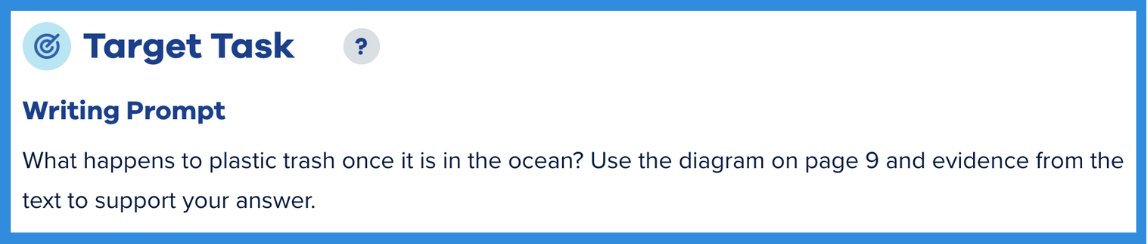
To successfully answer this question, students need to understand what an ocean gyre* is and how it’s explained in the text. To help students who may be struggling, the lesson provides embedded, research-based scaffolding. Teachers have the specific prompts and text-dependent questions they need to provide precise, in-the-moment support to students as needed, so students can still do the heavy intellectual lifting required to fully comprehend the text.
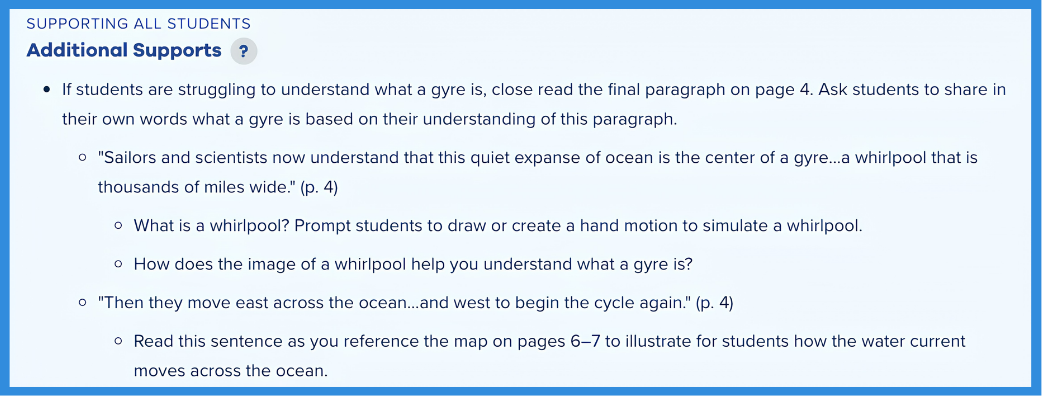
Additional Supports available in Fishtank Plus.
–6th Grade ELA Teacher
What Happens When We Believe In Students
When students get high-quality, grade-level content with the right scaffolds, we remove that ceiling—those artificial limits—on their potential. Something more important happens. Students grow from recipients of instruction into more confident, capable learners.
That's the deeper purpose of HQIM. We're doing more than just teaching ELA. We're affirming what students are capable of and giving them the tools to demonstrate it. Kristen Goncalves, Principal at PJ Kennedy Elementary in East Boston, describes the shift: "[In the past], kids were literally never writing. Never. They weren't expected to write until well into March, and we were like, 'What are we doing?'" The picture today is different: "We've got first graders writing paragraphs, which is a thing that was not happening before."
What changed? Not the kids' capacity, but the belief in their capacity and the materials to back that belief up. First graders, given grade-level expectations and the right scaffolds, can write paragraphs.
Kristen adds something we hear often from our partners: "It's less teacher work now, and it's more students doing the heavy lifting and the thinking."
That's real instructional independence. Teachers aren't carrying the entire load while students are kept behind a barrier of remediation. Instead, students wrestle directly with complex, grade-level work because the right supports are in place.
This isn't theoretical. At Bradley Elementary in East Boston, school leaders put this philosophy to the test. They expanded access to the high-quality, grade-level ELA curriculum—previously reserved only for the 'advanced work' track—and placed it in front of every student, including English Learners and students in inclusion classrooms. The results were immediate. The inclusion class outperformed the advanced class in writing. Within a few years, Bradley jumped from the 33rd to the 84th percentile in state rankings, eliminated its separate advanced track entirely, and was named a National ESEA Distinguished School. Principal Claire Carney puts it plainly: "We shouldn't be hiding what quality looks like from kids."
When we hand a student high-quality instructional materials and the scaffolds to access them, we're saying something powerful: I see your brilliance, and I have the materials in hand to help you show it.
Final Thoughts
Equity isn't about giving students easier work. It's about protecting their right to grade-level rigor and trusting them with the independence to rise to it.
That trust starts with one teacher's belief in one student. But it can't end there. Believing in every student's brilliance is the catalyst; a culture that makes that belief the standard in every classroom is the goal.
See how Bradley Elementary built a schoolwide culture of excellence in this Fishtank Spotlight. →
—
*gyre: a large system of ocean surface currents moving in a circular fashion, driven by wind movements
Related Blog Posts
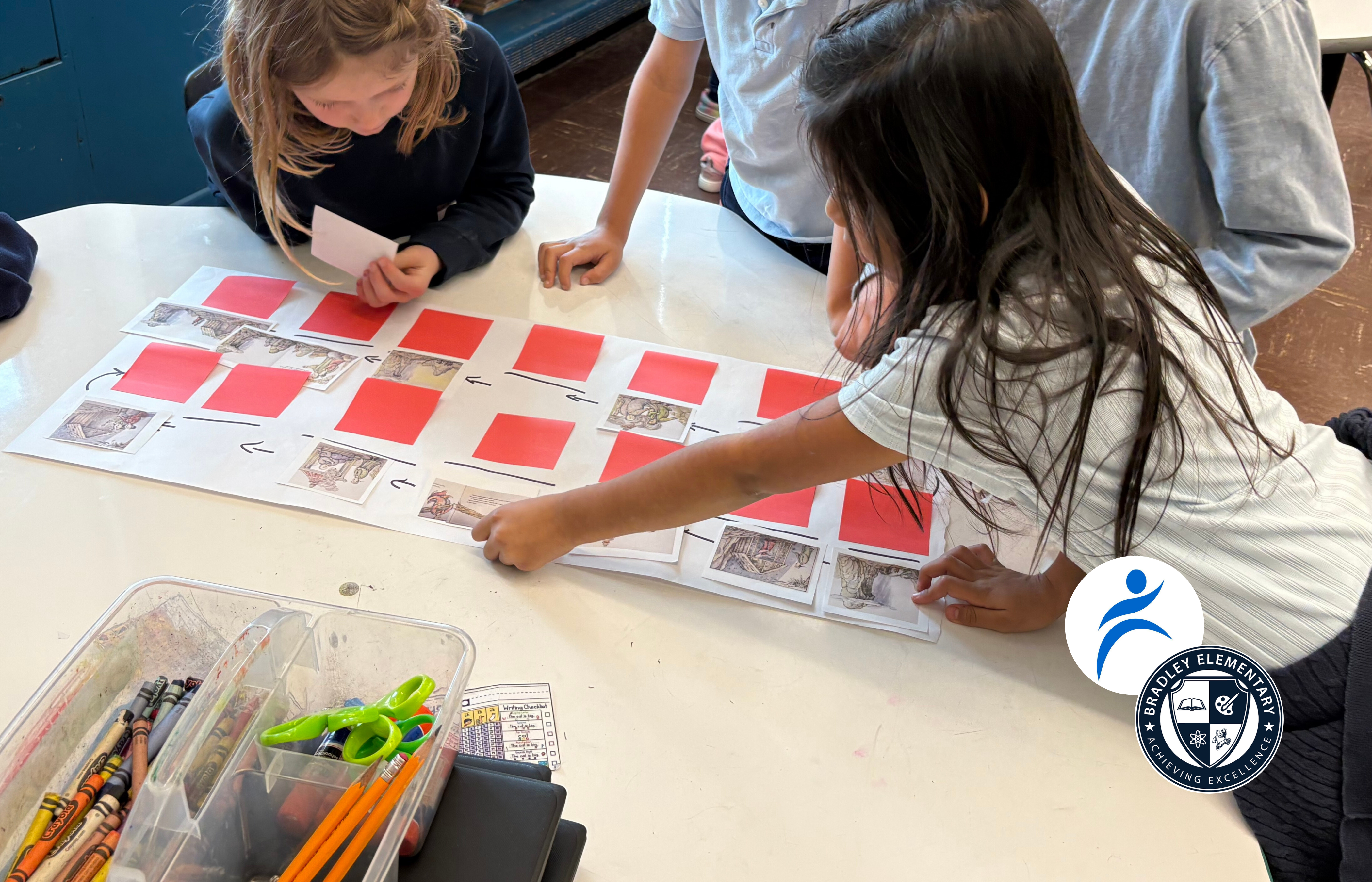
Fishtank School Spotlight: Bradley Elementary and Boston Public Schools
Read how Bradley Elementary School in East Boston, Massachusetts, jumped from 33rd to 84th percentile by giving all students—not just some—access to rigorous, culturally relevant ELA curriculum.

