How Fishtank Helps K–1 Students Become Skilled Writers
August 12, 2026
Abaigeal Guthrie
As an early elementary teacher, I felt at a loss when it came to supporting students' writing development. I remember frantically conferencing with students during independent writing, only to discover a wide variety of needs. One student's writing shifted across topics, another worked diligently to encode labels, while some were composing sentences. It was unclear how I could support their many different writing abilities.
Years later, I became a literacy coach. In this role, early elementary teachers looked to me for solutions to their students' varied writing needs. Rightfully, they asked for support:
- How do I help students progress in their writing development?
- How can students succeed if they do not yet have automaticity with phonological awareness and letter:sound correspondences?
- What should writing look and sound like in my classroom?
I wanted to offer teachers a set of research-based supports. I wanted the writing supports to be actionable, effective, and easy to implement. I wanted to offer answers to the very same questions that I had as a teacher during the writing block in my Kindergarten classroom. But I didn't have an effective solution then, either.
In 2024, I was offered my dream role as an Early Literacy curriculum writer at Fishtank. As a Fishtank writer, I had the time and space to study the research and develop a program that best suits teachers and students alike.
What the Research Says
Although the writing of young students may look different from conventional writing, La Rocca & Anderson (2022) acknowledge that writers at this phase are already writers. Early writers progress through distinct phases of emergent writing before learning to convey their thoughts through conventional writing. Sedita (2021) further notes that students in early grades benefit from systematic instruction of writing strategies that progress from drawing and labeling (emergent writing) to sentences and paragraphs (conventional writing).
The Writing Rope by Joan Sedita (2019) confirms just how many skills students need to write effectively. The framework highlights the many intertwined skills needed to become a skilled writer: critical thinking, syntax, text structure, writing craft, and transcription.
For early writers, writing is further complicated. Early writers are still developing their phonemic awareness, their knowledge of print concepts, and their fluency with sound-spelling correspondences. In short, they have not yet mastered the code needed to represent their thinking in words.
Understanding Early Writers
Building an understanding of emergent and conventional writing phases prevents gaps from widening over time and creates a shared language for rigorous instruction across classrooms and grade levels. Most importantly, it sends students a powerful message: your ideas matter.
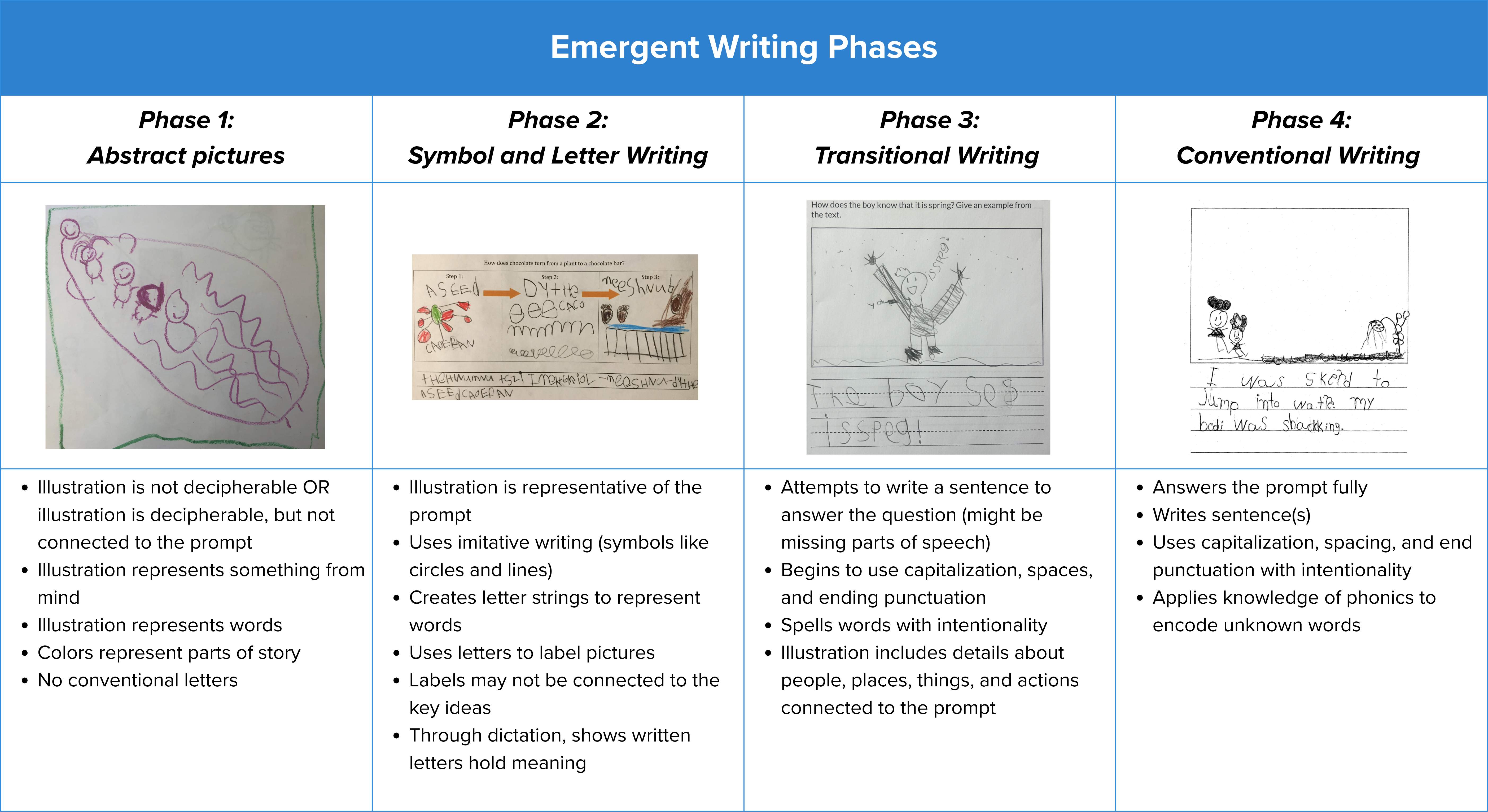
Emergent Writing
Emergent writers communicate their thinking through drawings, imitative writing, letter strings, and labels. With support and practice, students apply their growing knowledge of phonemic awareness, print concepts, and sound-spelling correspondences with increased intentionality across the four distinct Emergent Writing Phases.
Conventional Writing
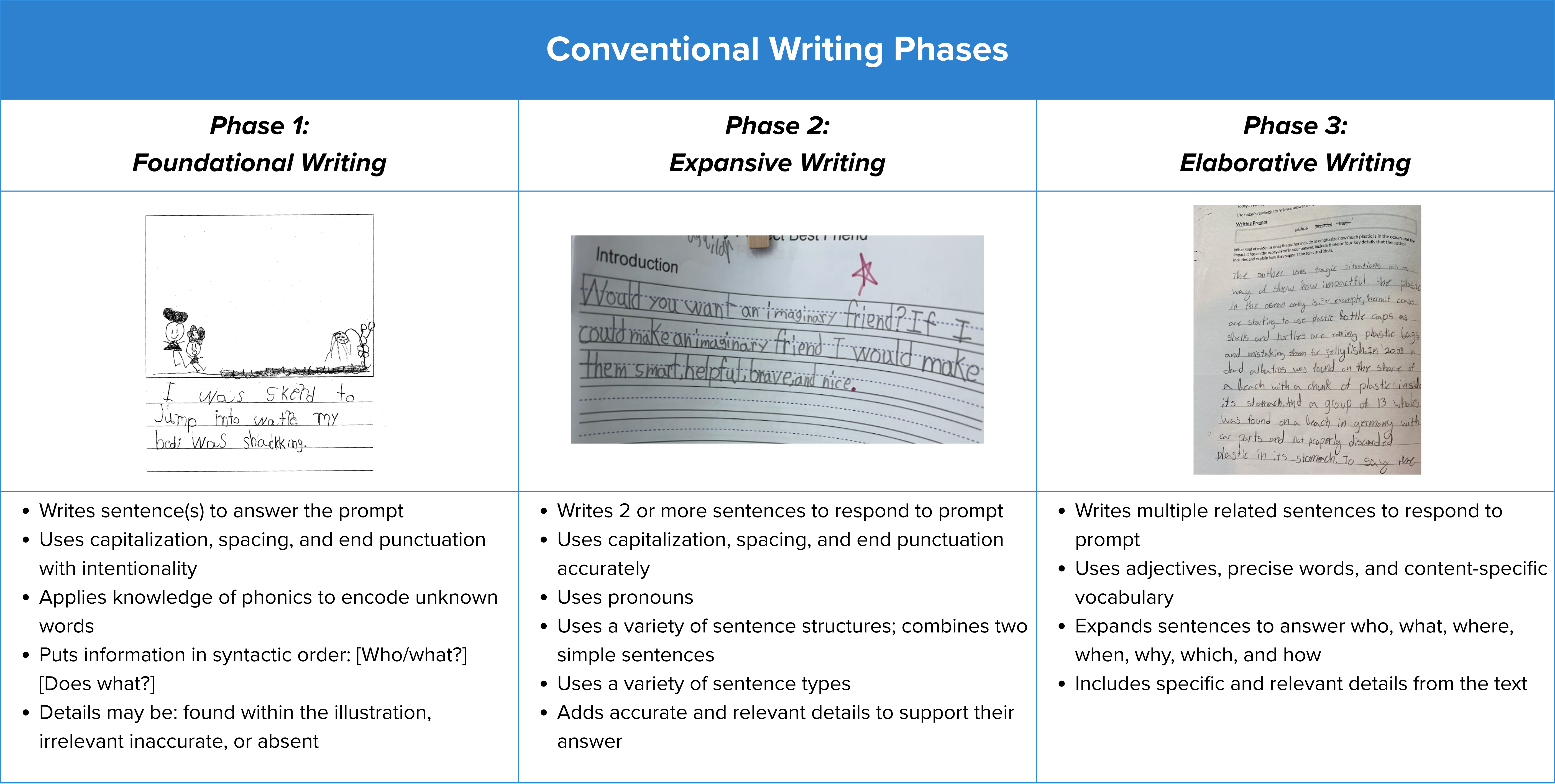
As conventional writers, students deepen their ability to express their thinking in sentences. With support and practice, students apply varied word choice, syntax, and organization to craft sentences and, eventually, paragraphs. This progression of skill can be thought of in the following Conventional Writing Phases.
From Research to Practice
As a writer at Fishtank ELA, I developed a program to support early writers' specific needs, offering teachers the exact resources I wish I had when I was a teacher and literacy coach.
Early Writing Teaching Points
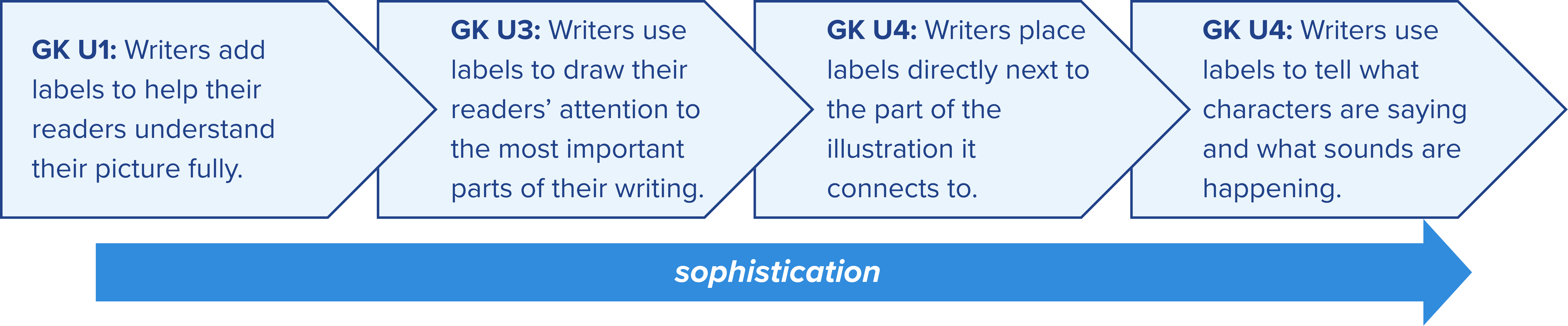
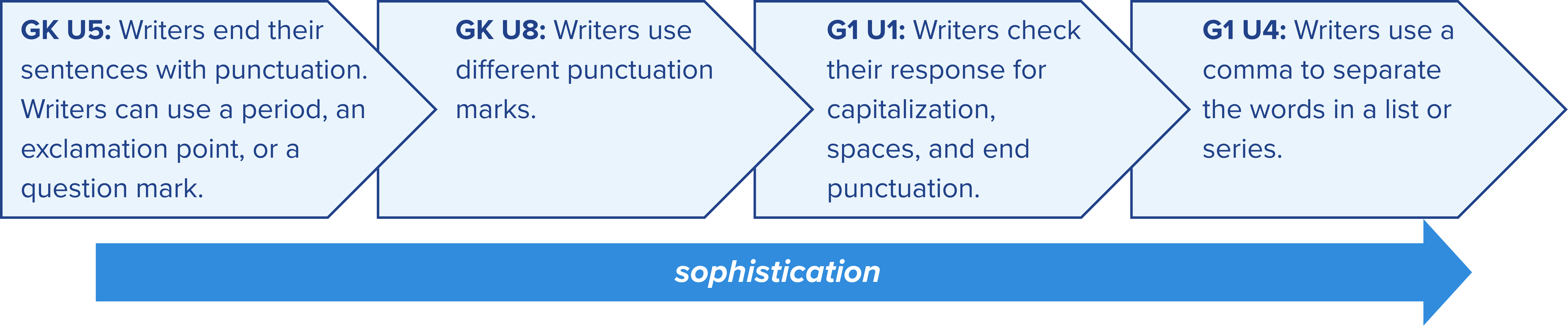
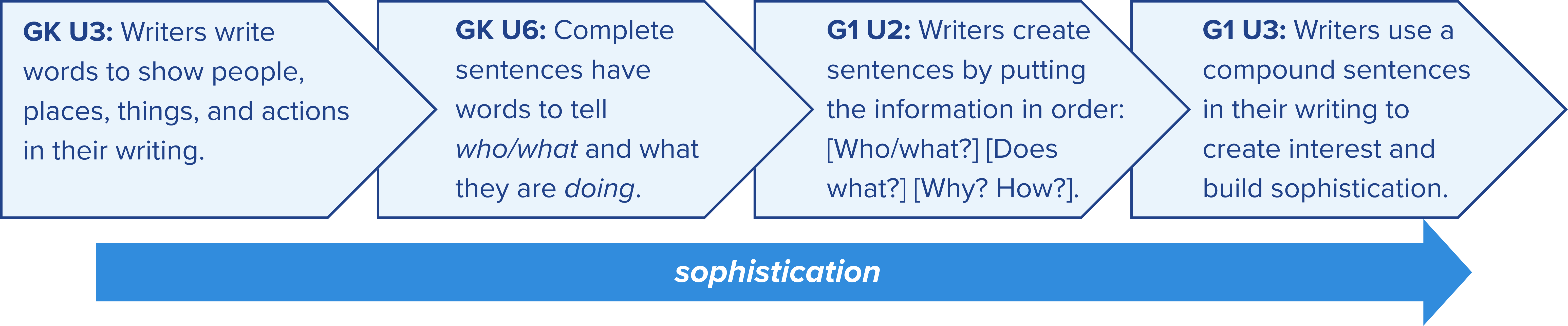
Many skills are needed to build skilled writers! At Fishtank ELA, we use teaching points to focus on one bite-sized skill at a time. Over the course of the scope and sequence, teaching points become increasingly sophisticated.
Labeling an Illustration
Punctuation
Sentence Structure and Syntax
Systematic and Explicit Instruction
During lessons, students receive systematic, explicit writing instruction to support their progress through the emergent and conventional writing phases. To do this, I leveraged three different modalities: oral rehearsal, independent writing, and an explicit mini-lesson.
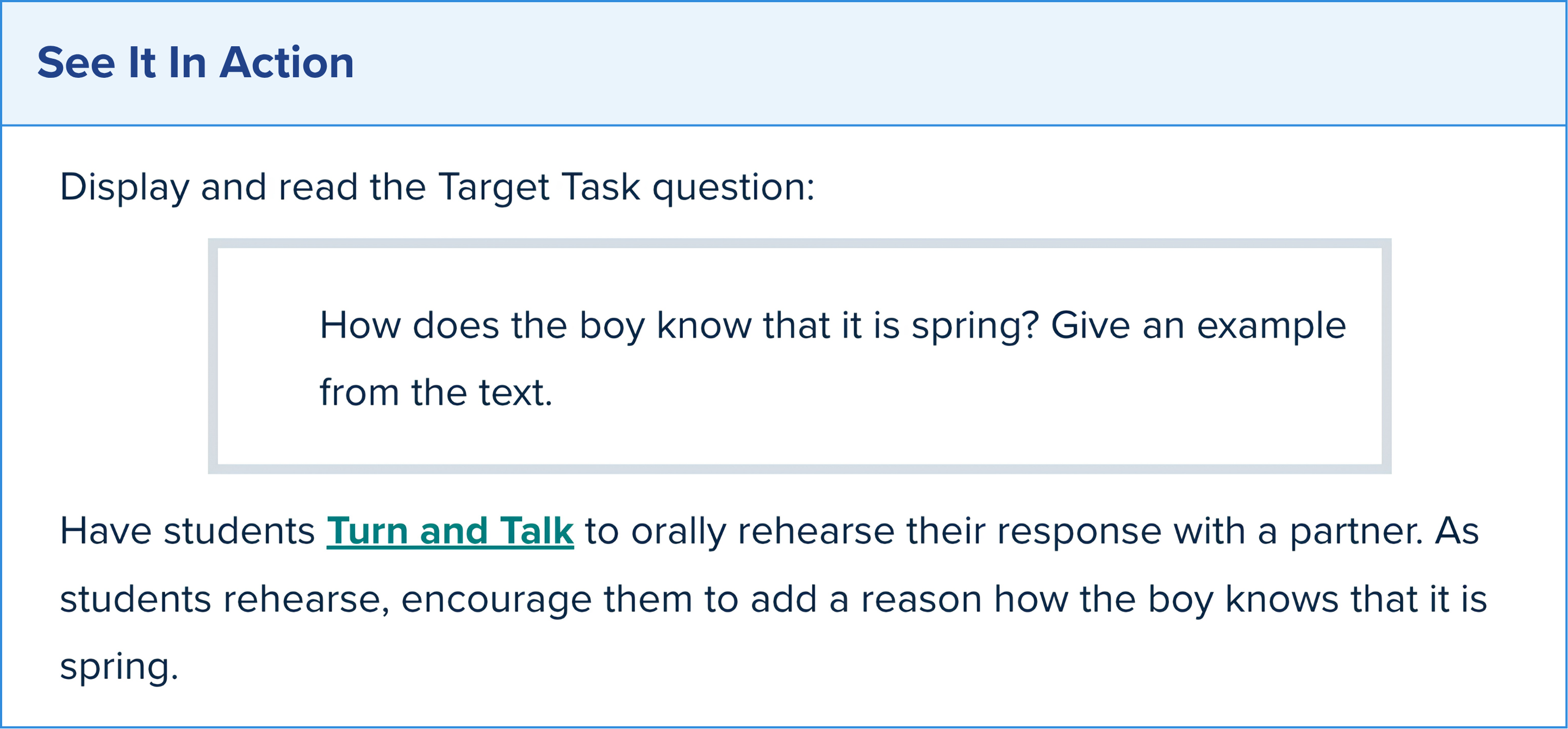
Oral Rehearsal
Students orally rehearse a response to a Target Task question about the read-aloud text.
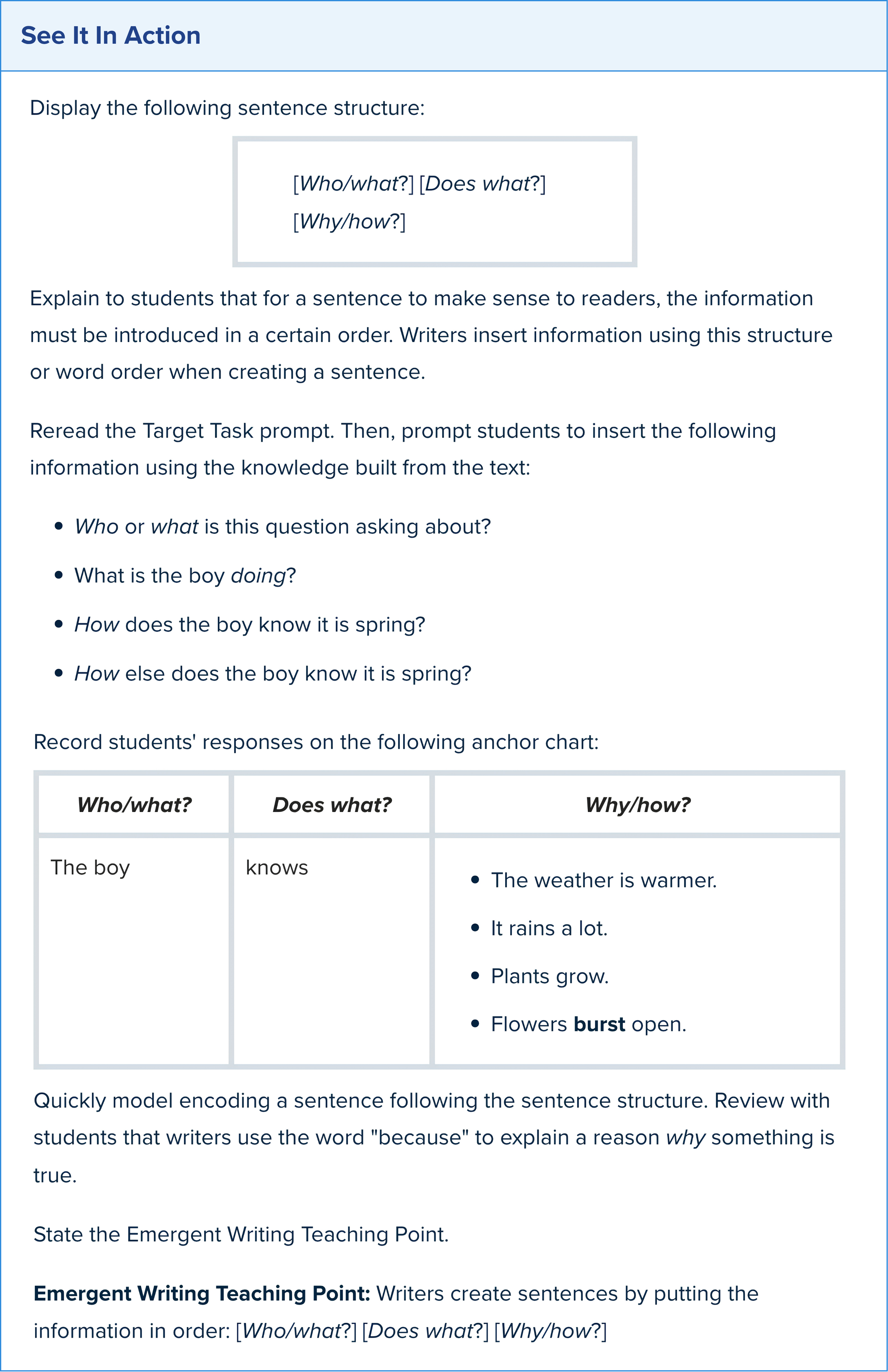
Explicit Mini-Lesson
Students work together to complete a mini-lesson that targets a bite-sized writing skill. The teacher uses targeted questioning to guide students' understanding of the teaching point.
Independent Writing
Students work independently to draft their response to the Target Task question. Depending on students' writing development, this may take the form of drawing, labeling, words, or sentences.
Why This Matters
Early writing instruction is about much more than handwriting or spelling accuracy. It is about giving students the tools to communicate ideas, explain reasoning, and respond to texts from the very beginning of their academic lives.
When schools have the right tools for writing in Kindergarten and first grade, students build the foundation needed for later success across all content areas. A leader at a Fishtank school said it best, "Now that our teachers use Fishtank's Emergent Writing Teacher Tool to analyze student writing, they understand how to differentiate for each student. This was something we have been trying to do for ages. Now that we have Fishtank, we are able to differentiate in a way that is meaningful and impactful."
At Fishtank ELA, we believe even the youngest students are capable of rich thinking and meaningful writing. With the right supports, scaffolds, and instruction, students do far more than “learn to write.”
They learn to communicate, analyze, and think.
Bring These Tools to Your Youngest Writers
Fishtank Learning provides high-level writing curriculum and instructional guidance for students in every grade. Talk to our team to bring Fishtank to your students, or preview our lessons today with a free Fishtank account.
Deepen Your Learning
Sources
-
Patterns of Wonder by La Rocca & Anderson
-
Keys to Early Writing by Joan Sedita
-
The Writing Rope by Joan Sedita
Related Blog Posts

8 Intentional Ways to Bring More Joy to Your Math Class
Try these 8 intentional, research-backed strategies to bring joy to your math classroom through movement, play, sensory engagement, and meaningful talk.
10 Tips for a Strong Start to the School Year with Fishtank ELA
Ready for back-to-school? Discover 10 practical tips and tools to internalize lessons, build community, and start strong with Fishtank ELA this year.
Create an Account


Stay Up to Date
Register for a free Fishtank account and stay up to date with the latest resources and guidance to be your most effective in the classroom.