Rising Together: How HQIM Drives a Schoolwide Culture of Excellence
July 30, 2026
High-quality instructional materials facilitate the consistency every student deserves
Every school community has moments of pure instructional magic. As educators, you’ve likely experienced a few of these moments yourself. You see it when 9th graders in Brooklyn are debating power dynamics and analyzing rigorous texts rooted in their own neighborhood. These are the moments—those aha! moments—that inspire us and demonstrate what students are capable of achieving.
Sometimes these moments are scattered throughout a building; other times, they’re limited to a grade level team or even a single teacher. But a school’s mission isn’t just to create pockets of success. It’s to ensure that every student, in every classroom, has predictable access to that same level of rigor and engagement.
When deep intellectual challenge relies on individual lesson planning, access becomes inconsistent, even accidental. But a student’s opportunity to engage with meaningful and complex thinking shouldn’t depend on which door they walk through on the first day of school. Nor should it require educators to spend their limited time cobbling together materials from scratch.
True educational equity means moving from isolated pockets of success to an entire system of consistent quality and rigor.
Achieving educational equity requires more than shared values and aligned scope-and-sequence documents. It requires shared tools, like high-quality instructional materials (HQIM) that build a shared foundation of intellectual challenge and curiosity across an entire building.
HQIM as a Common Language for Rigor
When every teacher in a grade-level team works from the same high-quality materials, something shifts in how these teams function. They share a common instructional language. The language supports a framework for a shared understanding of what deep student thinking looks like and the instructional approaches that foster it.
HQIM creates this foundation because it gives every teacher access to the same materials, instructional goals, and clear examples of student work. The curriculum becomes a shared reference point, allowing educators to collaborate on:
-
Deepening Intellectual Preparation: Unpacking the complexity of a current or upcoming unit together, and anticipating where students will shine and where they may need targeted support.
-
Analyzing Student Progress: Comparing student work, informal assessments, or summative tasks across classrooms for feedback on their own instructional practice.
-
Contextualizing Instructional Strategies: Tailoring specific prompts, visuals, and scaffolds that bring the curriculum to life for their students, leveraging their background knowledge to help them navigate complex concepts.
That shared understanding makes professional learning communities (PLCs) substantially different. Instead of spending time finding and creating materials, teachers spend time developing their own skills as educators and internalizing how to support students with them.
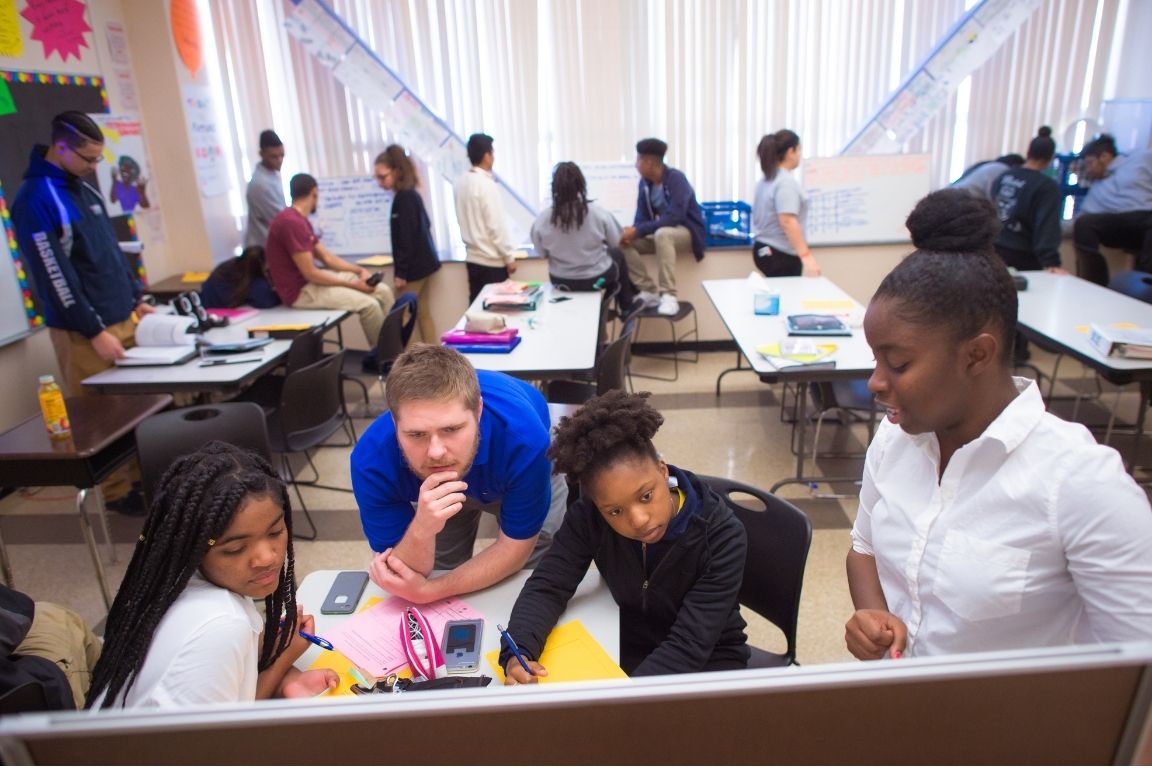 We see this shift clearly in our work with schools adopting Fishtank. As one teacher shared, having a shared, high-quality foundation completely redefined their daily focus: "It allowed me to save valuable planning time and run my classroom with confidence. Because of this, I was able to focus more on instruction and student needs, knowing I had strong, high-quality materials to rely on."
HQIM removes the logistical guesswork of curriculum and allows PLCs to become a space for true professional growth. With a deep understanding of the curriculum, teachers can spend less time managing resources and more time honing their craft. Ultimately, this shared foundation does so much more than just align classrooms. It builds collective teacher efficacy.
When educators are equipped with high-quality instructional materials and deep pedagogical content knowledge, they own their curriculum; they can adapt it purposefully to meet the needs of every student in front of them.
– Gabrielle Joella, Grade 7 Teacher, Cambridge Street Upper School (MA)
From Remediation to Purposeful Anticipation
An important caveat: adopting high-quality instructional materials doesn’t automatically transform a school’s culture. A school or district can implement rigorous HQIM and still find itself stuck in a remediation trap: looking backwards at what students missed, pulling them into remediation cycles, or unintentionally lowering the bar under the guise of meeting students where they are. In short, materials alone don’t determine the outcome. The implementation mindset does.
Shifting that schoolwide mindset requires a curriculum intentionally built on set instructional design principles. At Fishtank, four core values guide how we develop our materials to foster this mindset:
-
We believe in students. All students are capable of deep intellectual work when given the right entry points.
-
We trust teachers. Targeted, flexible scaffolds empower teachers to deliver rigorous instruction without rewriting the lesson.
-
We strive for racial equity and social justice. Access to complex and culturally relevant texts is a fundamental right.
-
We listen, learn, and adapt. Our curriculum evolves alongside the real-world experiences of educators to ensure our materials stay relevant, responsive, and effective.
Adopting an HQIM means inviting these same values into your school building. Our implementation model is designed to carry these beliefs directly into daily practice, and when this mindset takes root, a school’s culture grows in observable ways. Rather than reacting to past learning data, teams can use student work to actively anticipate and plan for the next instructional step. Every aspect of the implementation model, from deep intellectual preparation to student work analysis, aligns with fostering this culture. The central question shifts from remediation to anticipation: What are my/our students ready for next, and how will I/we create the access points to get them there?
The Mindset in Action
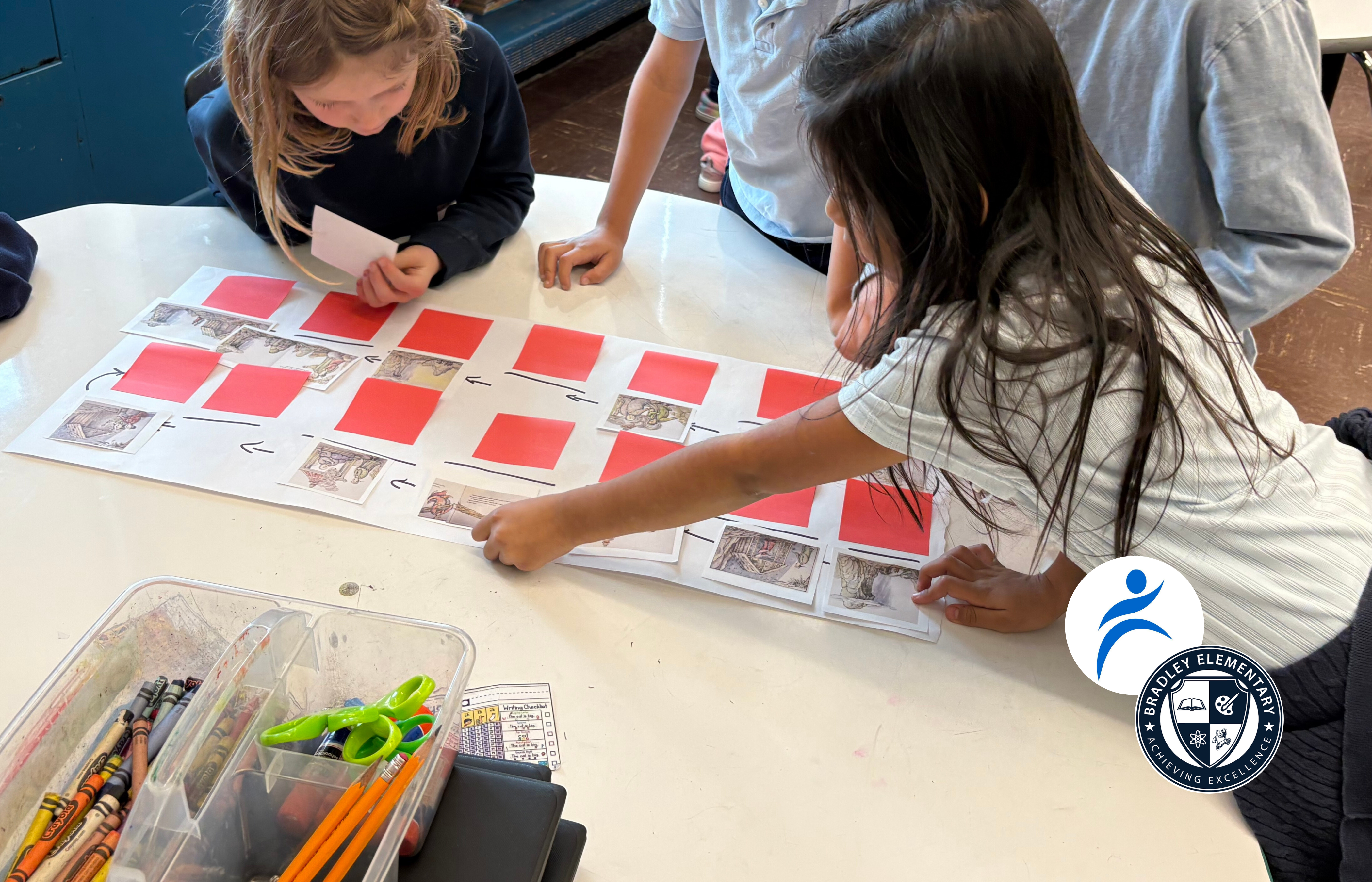
Our partner schools demonstrate the reality of this shift. In 2014, Bradley Elementary School in East Boston, Massachusetts, ranked in the 33rd percentile on state accountability measures. Instead of doubling down on remediation, school leadership chose to trust teachers and believe in their students. They adopted Fishtank ELA and invested in collaborative teacher development.
The results of that choice are undeniable. By 2025, Bradley ranked in the 84th percentile, earned recognition as a National ESEA Distinguished School for exceptional student achievement, and won the 20th EdVestors’ School on the Move award for student improvement and success.
But the truest reflection of their commitment to equity came from structural changes. Bradley used this success to phase out its separate advanced track entirely, moving to a fully inclusive model where the same rigorous curriculum challenged and engaged all children. As Principal Claire Carney said, “We shouldn’t be hiding what quality looks like from kids.”
The Vertical Dimension: Coherence Across Years
The common instructional language created by HQIM runs horizontally across a single grade level and vertically throughout a student’s K-12 instructional journey. When a district adopts a unified curriculum framework, expectations don’t reset every fall.
A Common Language of Expectations: Student Benefits
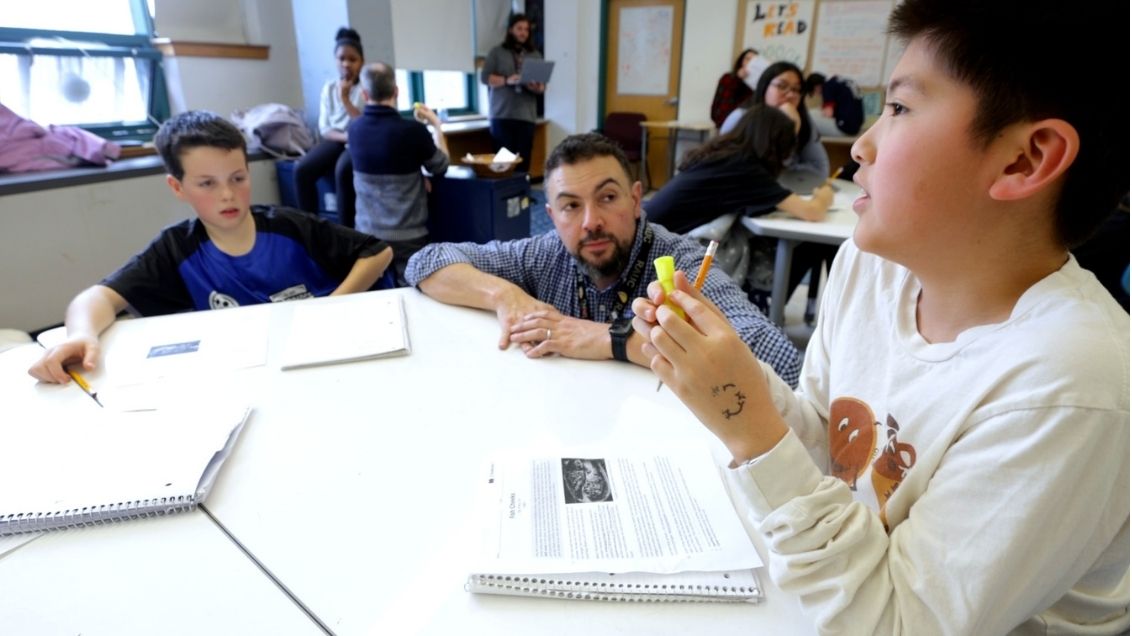 Consider how this plays out in a district using vertically aligned materials: In 5th grade, Fishtank students explore the complex factors that influence an entire community, analyzing how different groups of people have historically fought for immigration and civil rights. Because the district’s 6th-grade curriculum is designed to build directly on this foundation, students transition seamlessly from studying community identity to analyzing individual identity. The incoming 6th-grade teacher doesn’t have to spend weeks rebuilding a foundation of empathy and critical thinking. They can immediately push students to connect their historical learning to complex coming-of-age protagonists who are fighting to claim their place in the world.
Students thrive on structural consistency. When the depth of discussion, writing expectations, and analytical tools and procedures remain steady as students transition from elementary to middle school (and likewise from middle to high school), they don’t waste cognitive energy trying to decipher a brand new instructional system. That stability gives them the confidence to grapple with increasingly sophisticated tasks.
Aligned Expectations: Admin & Teacher Benefits
Teachers thrive on consistency, too. Kathleen Marx, for the Marzano Evaluation Center, lists five benefits of a common instructional language for school leadership and staff:
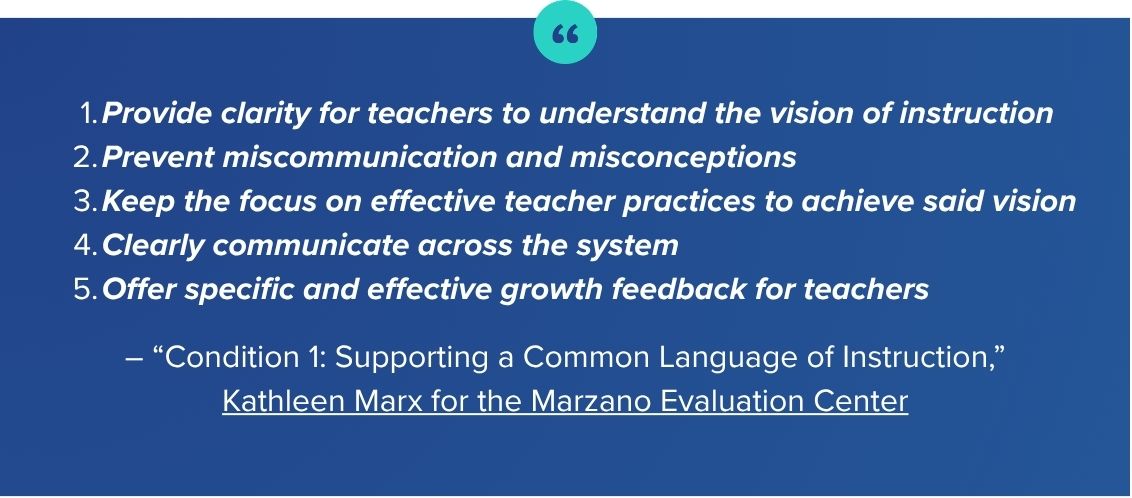
With aligned expectations across the building, school leaders can stay focused on improving teacher efficacy and analyzing student work rather than troubleshooting mismatched instructional goals between grade levels. Because the learning goals are transparent, teachers can stop guessing where their students are coming from, and students can stop guessing what success looks like.
From Consistent Language to Compounding Knowledge
Reading comprehension is deeply intertwined with knowledge; it thrives when students have a rich foundation of content to draw from. A student who arrives at a complex text already carrying relevant background knowledge (e.g., vocabulary, conceptual context, etc.) comprehends it more readily than one who doesn’t, regardless of their reading assessment scores.
That background knowledge doesn’t accumulate as easily on a diet of disconnected passages, each on a different topic and abandoned before it goes deep. True knowledge comes when students stay with ideas long enough to develop them.
Sustained engagement with whole books and thematically connected units cultivates comprehension. When students spend weeks with the same text, themes, and vocabulary returning in new contexts, their knowledge compounds.
The next text becomes more accessible because of the last one. Reading stamina develops because students stay immersed long enough to care how it resolves. Vocabulary sticks because it was learned in context and not as an unanchored list.
When a third-grader spends a year developing that kind of knowledge and engagement, she arrives in fourth grade knowing more, which makes her a more confident reader of harder texts. Her fourth-grade teacher, working from the same HQIM, understands exactly what students are bringing into the classroom. Instead of pausing to reteach, the fourth-grade teacher can immediately build on the existing foundation and extend the learning.
This is vertical coherence in practice. Districts that adopt HQIM across grades produce something that individuals can’t easily achieve in isolation: a reliable culture of high expectations in which rigor follows the student.
Rigor as a Baseline, Not an Exception
A culture of excellence can’t exist if high expectations are treated as an optional teaching style. When rigor is left up to individual classrooms, it becomes an exception rather than the baseline.
High-quality instructional materials make high expectations structural across an entire school, embedding deep learning experiences into the daily schedule so that every student, regardless of their assigned classroom, encounters the same high bar.
When district leaders provide this level of structural consistency, three things happen simultaneously:
-
Teachers feel genuinely supported by materials and structures designed to help them succeed, freeing them from the exhausting cycle of sourcing and building on their own.
-
Leaders gain the clear visibility required to see what’s working, what needs support, and precisely where to direct professional development resources.
-
Students experience a consistent culture of high expectations that persists from room to room, grade to grade, and campus to campus.
Building the Language from the Ground Up
A consistent culture of rigor and high expectations demands a common instructional language. That language must be rooted in how students learn: in the Science of Reading, in the cognitive demands of complex text, and in the instructional practices that produce genuine comprehension and authentic writing.
When we give all students access to this depth of content, learning becomes inherently engaging. Sustained engagement, in turn, builds deeper knowledge because students stay immersed in ideas long enough to absorb them. The vertical bridge between grades holds strong only when the materials on both sides are built on these same principles.
At Fishtank, we believe that building this deep knowledge requires grounding ELA instruction in whole, authentic books rather than relying solely on disconnected reading passages. Explore our text selection process to see how we pair complex, engaging texts with carefully chosen support materials to foster sustained student curiosity and meaningful classroom discourse.
Related Blog Posts
Why Grade-Level Content is Key to Closing Opportunity Gaps
Is your differentiation creating an artificial ceiling on student achievement? See how HQIM and grade-level content with built-in scaffolds drive standards mastery for all students.
Fishtank School Spotlight: Bradley Elementary and Boston Public Schools
Read how Bradley Elementary School in East Boston, Massachusetts, jumped from 33rd to 84th percentile by giving all students—not just some—access to rigorous, culturally relevant ELA curriculum.

